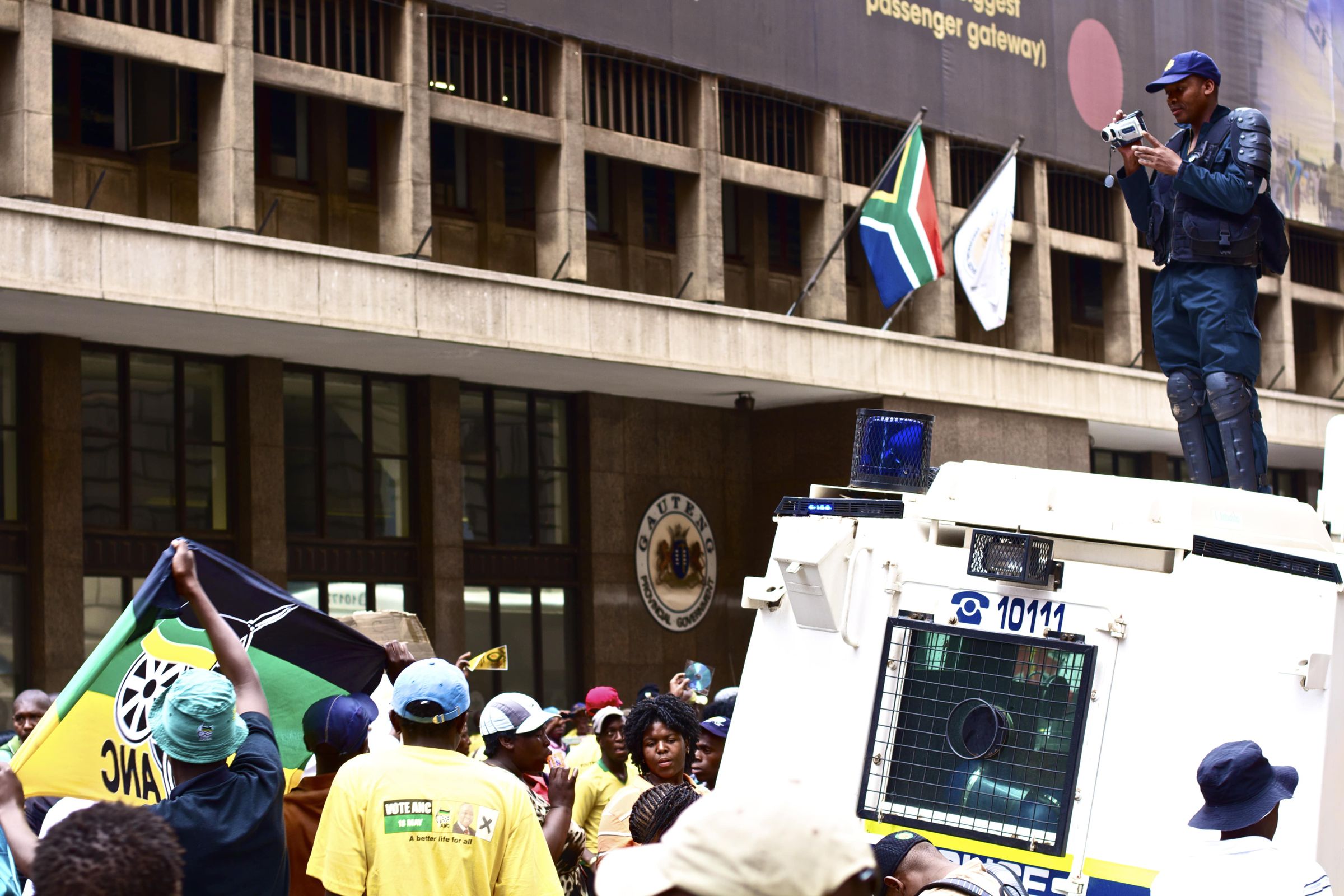
City Voters Turn From ANC, Reshaping Urban Politics
Urban voters redraw the political map of South Africa's eight metros
The roughly 40% of South Africans who make their homes in the country’s eight metropolitan municipalities have watched their cities vote differently election by election over the past decade, turning away from the African National Congress in numbers that would have seemed implausible when the 2016 local elections were held.
Treating the eight metros as a single polity, the Democratic Alliance won 36.4% of the vote in the 2026 local government elections, against 20.4% for the ANC. Ten years earlier the picture was nearly the mirror image: the ANC led narrowly with 43.4% while the DA stood at 41.5%. The ANC’s urban support has fallen by 23 percentage points since then, while the DA has shed only six.
What makes this realignment matter beyond party politics is what the metros represent. Together they account for approximately 57.0% of South Africa’s GDP and 53.3% of national employment. In other words, the communities shifting their votes collectively produce well over half of the country’s economic output and supply more than half of its employed population.
The turning point came in 2021, when the ANC still held a sliver of an advantage with 34.9% to the DA’s 34.3%. Five years later that narrow lead has been reversed and stretched into a 16-percentage-point gap.
Meanwhile, the larger story is one of fragmentation. Smaller parties have carved out significant shares of the urban electorate: ActionSA took 10.7% of the metro vote in 2026, followed by the uMkhonto weSizwe Party on 9.2% and the Economic Freedom Fighters on 5.1%. The Patriotic Alliance, the Inkatha Freedom Party and the Freedom Front Plus each secured smaller shares. The combined ANC and DA vote, by contrast, has contracted from 84.9% of the metro vote in 2016 to 56.8% by 2026.
The result is a fundamental change in the political balance of the country’s largest urban centres. The ANC, which once dominated these constituencies, now sits well behind the DA, and the shift signals more than an electoral setback. In the metros where most South Africans work and earn, political power now rests with a new leading party, and the voters who put it there will live with the consequences of that change every day.
Q&A
How much of South Africa's population lives in the eight metropolitan municipalities?
Roughly 40% of South Africans make their homes in the country's eight metropolitan municipalities.
What were the combined ANC and DA vote shares in the metros in 2016 and 2026?
The two parties together took 84.9% of the metro vote in 2016, but only 56.8% by 2026.
Which smaller parties gained significant shares of the 2026 metro vote?
ActionSA took 10.7%, the uMkhonto weSizwe Party 9.2%, and the Economic Freedom Fighters 5.1%, with the Patriotic Alliance, Inkatha Freedom Party and Freedom Front Plus each securing smaller shares.
When did the turning point in metro voting occur?
In 2021, when the ANC still held a narrow lead of 34.9% to the DA's 34.3%; five years later the gap had reversed and stretched to 16 percentage points.