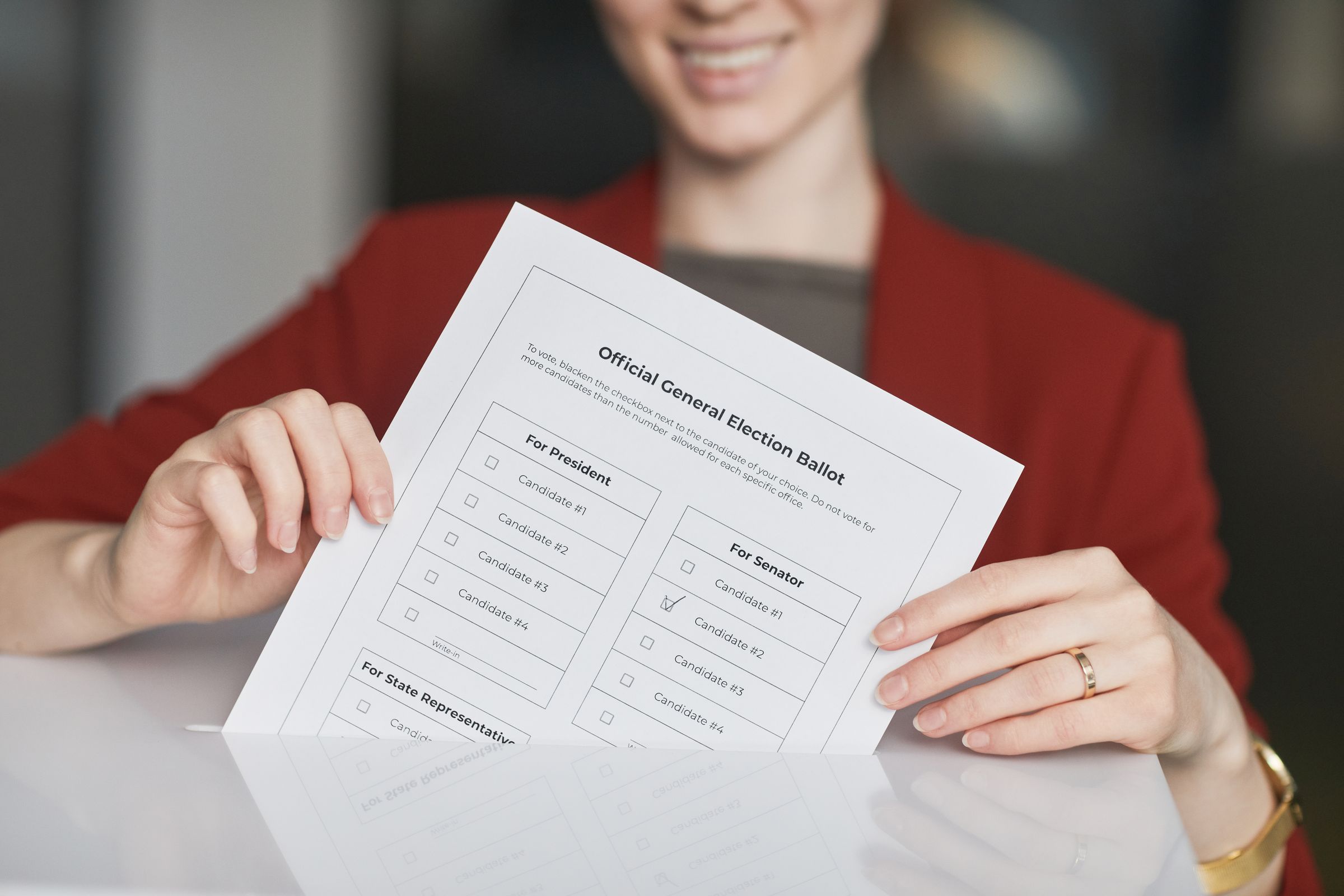
South Africa’s 2026 local government elections were, above all, a delivery story. On Sunday evening, 8 November 2026, at the National Results Operation Centre in Midrand, the Electoral Commission declared results that its own machinery had produced on schedule, at scale, and under scrutiny. The parties that lost did not contest the outcome. Rival leaders shared a stage and a dinner table, ululated and danced, and commissioners embraced the very party representatives who had spent weeks testing their every decision. Behind that political harmony stood an operational achievement, and it is the machinery that deserves the closest attention.
The scale of what the Commission delivered is easy to overlook. Some 29.2 million voters were registered. About 188,000 electoral staff worked across 23,696 voting stations. Around 56,000 voter management devices tracked turnout, ballot use and staff attendance in real time. More than 100 million ballot papers were printed for a contest involving 521 political parties, 636 independent candidates and roughly 137,000 candidates competing for 10,526 council seats in 213 municipalities.
Additional reference context is available at https://www.sabcnews.com/sabcnews/2026-ls-south-africas-proud-democratic-moment-and-lessons-africa-cannot-ignore/.
Then came the operational stress test. On 15 October, less than three weeks before polling day, a Constitutional Court order required changes to candidate lists in six municipalities. About 28 million ballot papers had to be set aside and reprinted. The Commission extended the same treatment to 32 other similarly placed parties so that no one was advantaged, and still opened the polls on time on 4 November. That is not luck. It is institutional competence, the kind that separates a functioning electoral system from a fragile one.
The Commission also recognised that, in 2026, elections are won and lost in the information space as much as at the ballot box. Research by the Human Sciences Research Council had warned that voters were heading to the polls in a low-trust environment. The operational response was practical: a code of conduct against disinformation, an agreement with social media platforms, and the establishment of a complaints portal. The Commission also opened a first-ever Virtual Results Operating Centre, allowing parties to watch results being captured and audited from anywhere. The results data feed answered more than 14 million requests.
The delivery outcome speaks for itself. Turnout rose to 52%, up 6.1 percentage points from 2021, reversing years of decline. According to the Commission’s voter satisfaction survey, 90% of voters regarded the process as free and 91% as fair. Ninety-five per cent were satisfied with the Commission’s service, and 91% waited in a queue for 30 minutes or less. No party won a national landslide. There are now more hung councils than ever, 137 in total. Yet parties accepted the results and turned to coalition talks rather than the streets.
Electoral Commission Chairperson Mosotho Moepya put the underlying principle plainly when he declared the elections: “The freeness and fairness of an election cannot be presumed. It must be established.” This year, the Commission established it. Chief Electoral Officer Sy Mamabolo reminded South Africans that an election is not merely a headcount or the act of casting ballots. It is the means by which a society hands over power peacefully, through a lawful and constitutionally mandated process, and the means by which the least powerful citizen speaks with the same weight as the most powerful. Section 19 of the Constitution guarantees that right. In his address that evening, Mamabolo invoked the words of former Constitutional Court Justice Albie Sachs: each citizen’s vote is a badge of dignity and personhood, an affirmation that everybody counts.
The contrast with the rest of the continent is what makes the operational record matter. Less than two years ago, Mozambique’s disputed October 2024 election was followed by weeks of protests in which more than 100 people were killed, according to civil society monitors. In Tanzania, a government-appointed commission of inquiry found that at least 518 people died in violence around the October 2025 general election. Kenya still carries the scars of 2007-08. In too many places, the announcement of results is the moment families lock their doors. Africa also has proud democrats: Botswana, Ghana, Senegal and Mauritius have all seen peaceful changes of government at the ballot box. But on 8 November South Africa offered one of the clearest examples on the continent of what an election looks like when institutions are trusted and losers accept defeat. That is an example worth exporting to Africa and to established democracies abroad where accepting defeat is no longer guaranteed.
Five operational lessons stand out. First, independence is earned every election. Trust in the Commission remains high at over 81%, and it must be maintained through transparency, not assumed. Second, the rule of law includes the courts. The late Constitutional Court order was costly, but it was obeyed. Electoral bodies that bend to court orders, rather than resist them, strengthen democracy. Third, violence must be met with the law, swiftly. In Douglas, in the Northern Cape, party activists stormed a voting station and destroyed ballot papers before counting. The Commission ordered a revote, approached the Electoral Court and laid criminal charges. Such incidents were the exception, and they must remain so. Fourth, the people who run elections need a proper legal framework. Presiding officers and their deputies need nationally set standards of skill, and there must be clear rules on using public servants at voting stations. Fifth, democracy does not end at the ballot box. A vote is a mandate, not a blank cheque, and the coming weeks of coalition negotiations will test whether the politicians honour the voters as gracefully as they celebrated them.
Thirty-two years after the first democratic queues of 1994, and 30 years of a progressive constitution, it is easy to take all this for granted. It should not be. The Commission’s Chairperson likened this election to an orchestra in which each player sounds different, yet the result is unmistakably South African. The national motto, !ke e: /xarra //ke, calls on diverse people to unite, and nowhere is that clearer than in a voting queue, where the domestic worker and the CEO, the farmer and the student, speakers of twelve official languages, all wait in the same line and cast a vote of exactly equal weight. South Africa showed that the machinery of democracy can be built, run and trusted, and Africa and the world were watching and learning.