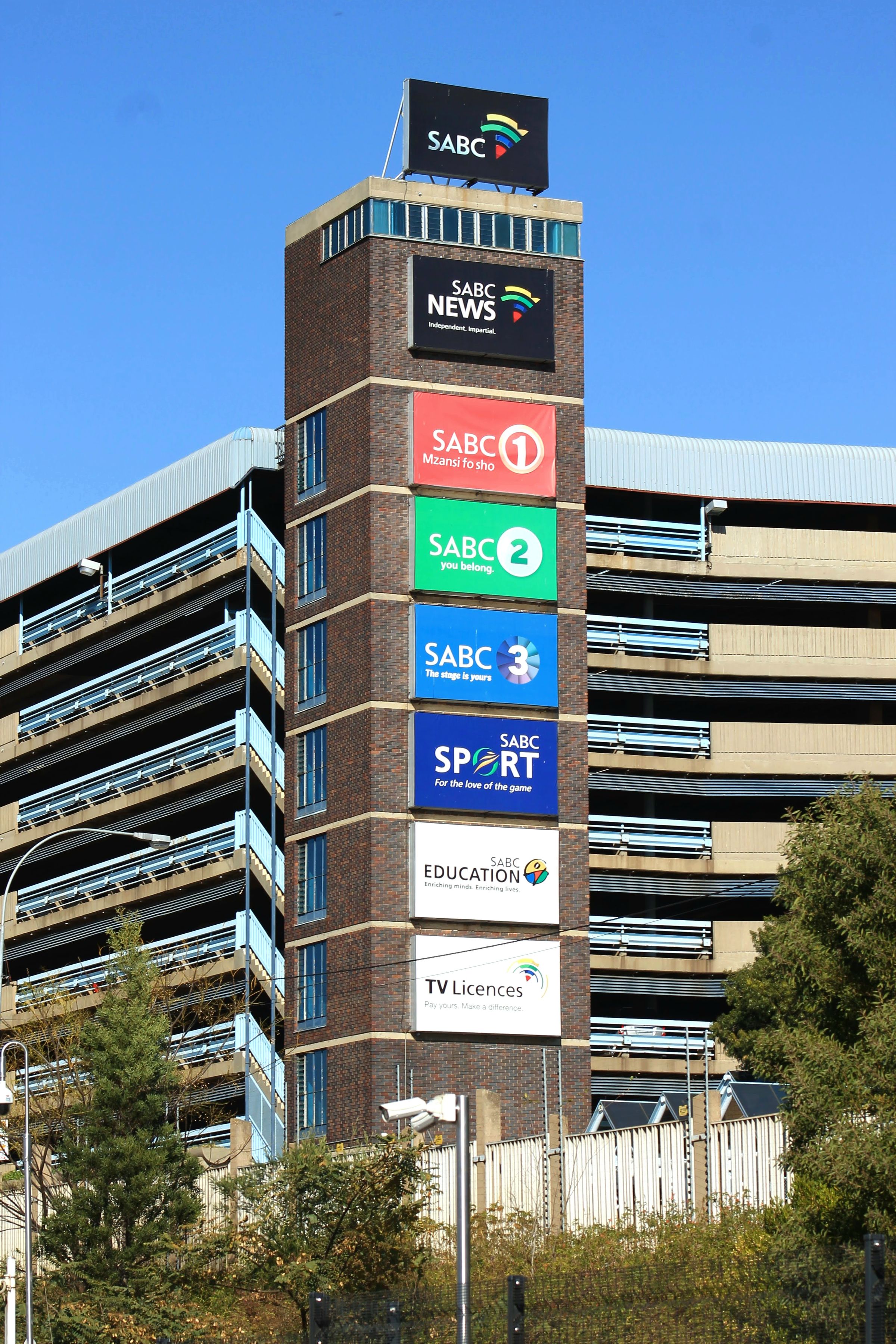
South African television’s most familiar faces were made, in large part, by its institutions. Before social media let presenters build their own audiences, the country’s broadcasters decided who reached the public. The SABC above all, alongside e.tv, Channel O, Vuzu and MTV Base, shaped the national roster of presenters, and that roster doubles as a record of how South African broadcasting itself evolved, from the talk shows of the early 1990s to today’s multi-platform outlets.
The institutional story starts with the SABC. In 1992 Felicia Mabuza-Suttle began hosting Top Level for the public broadcaster, a programme that later became The Felicia Show and opened space for conversations on social, political and personal issues at a pivotal moment in the country’s history. Her guest list included Nelson Mandela, Desmond Tutu and Miriam Makeba, figures whose presence on a South African talk show reflected the weight of the moment.
The SABC’s role as a career incubator recurs across the list. Zama Ngcobo started as an SABC1 continuity presenter before moving into acting, radio and production, including work on Generations, Ukhozi FM and Leading Citizens. Zanele Potelwa, part of the newer generation, has built her career across SABC platforms as a presenter, MC and voice artist.
The broadcaster also carries the weight of representation milestones. Cynthia Tshaka made history as South Africa’s first Black female sports broadcaster, beginning her television sports career in 1995 and covering football, rugby, boxing, athletics and cricket, including major international events. She also created Women Sports Talk, a programme dedicated to women in sport, raising questions of representation long before they became mainstream. Carol Tshabalala became the country’s first female television sports-programme anchor before she had turned 20, working across SABC sports as a presenter, reporter and scriptwriter, with reporting duties that took her to the 2006 FIFA World Cup.
Accountability journalism has its own place in this history. Devi Sankaree Govender spent 18 years on Carte Blanche investigating stories spanning politics, corruption, healthcare and social issues, building a reputation for asking the questions others avoided, and continued that tradition with The Devi Show. In news broadcasting, Leanne Manas has anchored Morning Live for more than two decades, interviewing politicians and business leaders while covering the country’s biggest national moments. Noxolo Grootboom, after more than three decades at the SABC, became synonymous with isiXhosa television news before her retirement in 2021 prompted a wave of national nostalgia.
Beyond the public broadcaster, commercial and music channels shaped a different kind of presenter. Vinolia “V-Mash” Mashego became one of the recognisable faces of 1990s entertainment television through Jam Alley, later acting on Generations, Muvhango and Isibaya. Noeleen Maholwana-Sangqu hosted 3Talk with Noeleen for 12 years, known for intimate conversations on relationships, race and social issues. Nonhle Thema defined 2000s entertainment television through Channel O’s O-Boma and O-Access and Vuzu’s V Entertainment, later fronting her own reality show, Nonhle Goes to Hollywood. Lalla Hirayama began as a teenager on e.tv’s Craz-e before hosting Tropika Island of Treasure and Masters of Rhythm, while Precious Kofi started on Hip 2B Square and, at just 19, conceptualised Precious Africa, a documentary series spanning seven African countries.
Meanwhile, the modern era shows presenters operating across multiple platforms and media, with institutions functioning less as gatekeepers and more as launch pads. Bonang Matheba’s arrival on SABC1’s LIVE redefined what a television presenter could become, with radio, business, producing and fashion following. Minnie Dlamini entered the spotlight in 2010 as the new face of Live Amp and later founded Beautiful Day Productions. Pearl Thusi moved from The Real Goboza and Live Amp to joining the cast of the American series Quantico in 2016, a crossover moment for a South African personality on an international network series. Nomalanga Shozi moved from Rhythm City into All Access Mzansi and BET Africa. Nomuzi Mabena, known as Moozlie, built from MTV Base into music and television, and Pamela Mtanga turned a childhood dream of presenting on YOTV into her own Channel O show. Hulisani Ravele, a YOTV child presenter who grew into adult broadcasting, and Penny Lebyane, who moved from Metro FM to Motswako and Sunrise, round out a lineage in which the institutions of South African television trained, amplified and, in many cases, made the country’s most familiar faces. As the gatekeeping power shifts from broadcaster to platform, the question that lingers is which institutions will now decide who reaches the South African public.