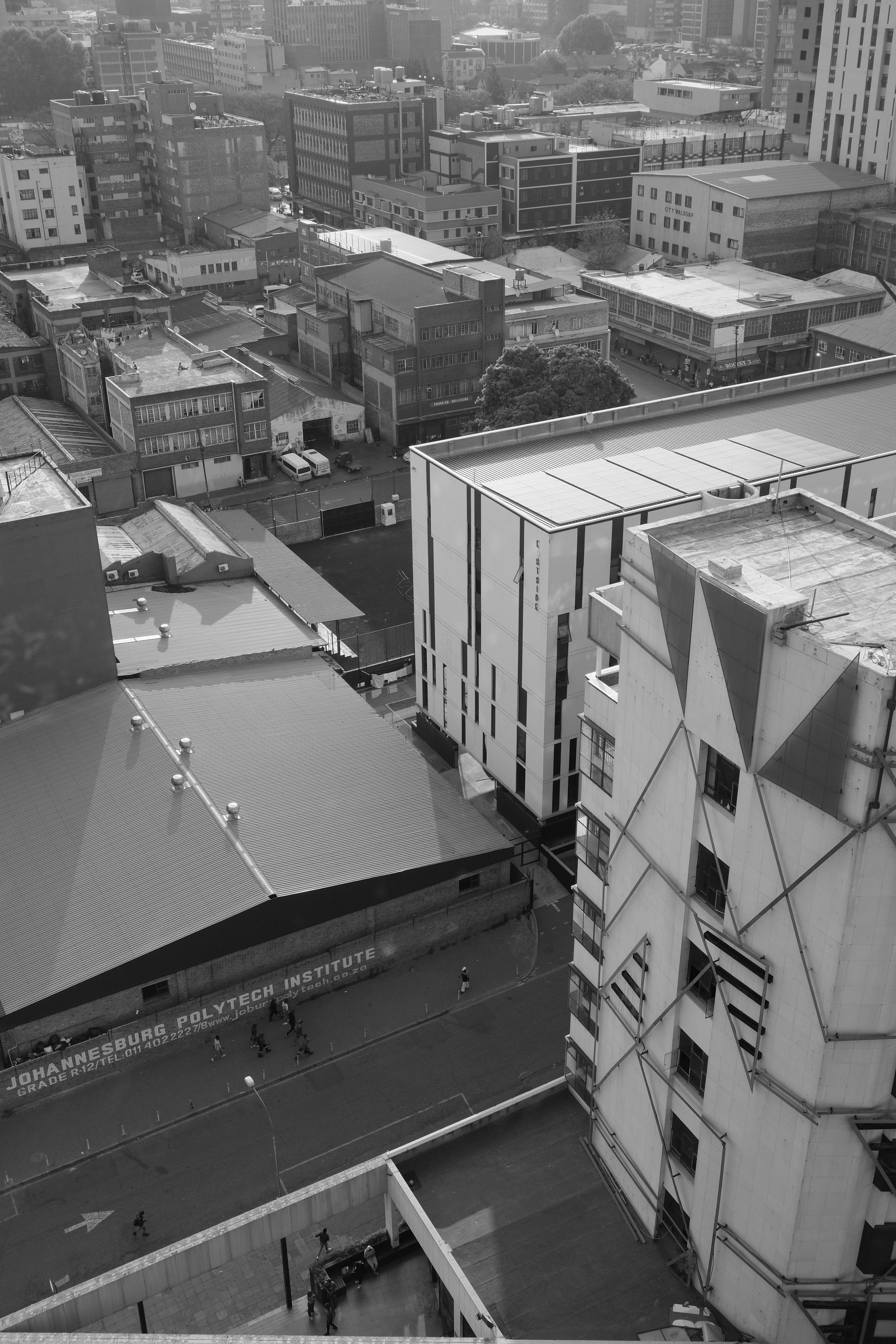
SA's cities face 80% urban influx by 2050: can they cope?
Municipal institutions, not demography, will decide whether urban growth delivers growth or dependency
The governance question facing South Africa’s cities is no longer whether people will move to them, but whether the institutions that run them can bear the weight of that movement. By 2050, according to projections cited in a recent paper by Terence Corrigan, up to 80% of the country’s population will live in its cities, which will “ever more comprehensively dominate its economic landscape”. That projection places municipal government, not national policy alone, at the centre of the country’s economic future.
Corrigan’s paper, titled “Local Government: Crises Decades in the Making and How to Deal with Them”, argues that the urban transition now under way “creates both an opportunity and a risk”. The distinction he draws is one of governance quality rather than demography. “Well-governed cities can support greater economic activity and productivity; poorly governed cities can see the advantages of agglomeration dissipated through congestion, infrastructure failure, informality and declining investment.”
The scale of the demographic shift is not in dispute. Just under 70% of South Africans already live in a town or city, a proportion that reflects a historical process no government has managed to reverse. Once the industrial revolution took hold, movement toward urban concentrations proved unstoppable. Even apartheid, at its most determined, could not halt it. The “influx control” law, designed to keep black people out of “white” towns and cities, fell in 1986, a full decade before democratic South Africa’s constitutional framework was ratified, undone by what the source describes as the onrush of insistent modernity.
Forty years on, no one needs to spend money on transport to persuade South Africans that their brightest future lies in urban living. The difficulty, Corrigan argues, is that urban living does not automatically deliver on its promise. Cities “generally increase productivity, provide a forum for expanding complex and value-adding activities, and offer people the socioeconomic mobility that promises tomorrow will be an improvement on today”, but only where the institutions supporting them function.
That is where the accountability question sharpens. Corrigan writes that South Africa “is not only becoming an ever more urban society; it is becoming more dependent on the capacity of its urban institutions”. The larger the urban population becomes, the greater the consequences of failure in the systems that support it. Infrastructure deterioration, weak planning and ineffective administration, he argues, undermine the quality of life of established communities and constrain the ability of towns and cities to accommodate new residents and businesses, to support investment and to realise the productivity benefits associated with economic concentration.
On this reading, the success of the urban transition cannot be measured simply by how many people live in cities. It must be assessed by what those cities enable their residents to do. “The objective should be to ensure that growing urban populations are accompanied by expanding productive activity, investment and economic opportunity, rather than by an increasing dependence on consumption and transfers.”
The reform agenda Corrigan outlines goes beyond what he calls “conventional prescriptions for better administration” and beyond ensuring that municipalities stick to the rulebook. Compliance, in his framing, is a floor rather than a ceiling. The task is to create cities and towns “capable of supporting productive economic activity and capturing the benefits of urban economies”. The “ultimate test of reform”, he writes, “should be whether local government can become functioning and developmentally oriented rather than simply compliant”.
The stakes extend to the constitutional settlement itself. The freedom to live wherever one chooses is an inarguable dividend of the postapartheid order, but it is a dividend that pays out only if towns and cities can and do reward that choice. A right of residence without functioning municipal institutions to receive the newly arrived converts a constitutional promise into a practical gamble.
For the office-holders, councils and administrators who run South Africa’s municipalities, the projection of 80% urbanisation by 2050 is therefore less a forecast than a deadline. The systems they administer will determine whether the country’s deepening urban concentration produces growth or dependency, and whether the promise that drew people to the cities is kept or squandered. Thoroughgoing reform, Corrigan concludes, is unevadable.
Michael Morris is head of media at the South African Institute of Race Relations.
Q&A
What proportion of South Africa's population is projected to live in cities by 2050?
Up to 80%, according to projections cited in Terence Corrigan's paper, with just under 70% already living in a town or city today.
What does Corrigan identify as the decisive factor in whether urbanisation succeeds?
The quality of governance: well-governed cities can support greater economic activity and productivity, while poorly governed ones see agglomeration advantages dissipated through congestion, infrastructure failure, informality and declining investment.
How does Corrigan define the ultimate test of local government reform?
Whether local government can become functioning and developmentally oriented rather than simply compliant; compliance with the rulebook is a floor rather than a ceiling.
Why does the article link urbanisation to the constitutional settlement?
The postapartheid freedom to live wherever one chooses is a dividend that pays out only if towns and cities have functioning municipal institutions to receive the newly arrived; otherwise a right of residence becomes a practical gamble.