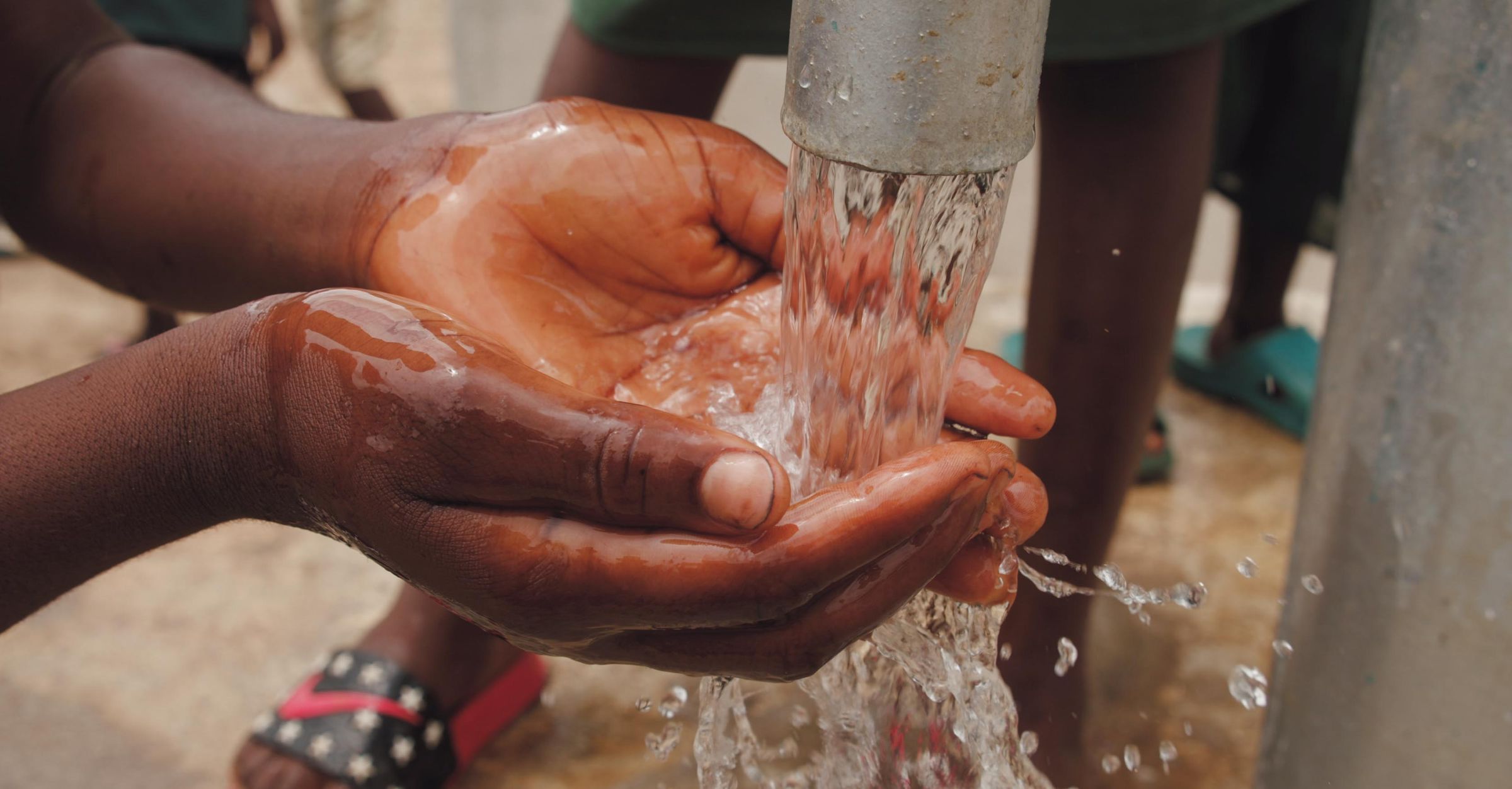
Banks to help fund South Africa's water systems
Government and banks team up to close the funding gap for water services
South Africa’s taps, treatment plants and pipelines depend on money that is not yet flowing fast enough, and the newest attempt to change that comes from an unexpected pairing: the Ministry of Water and Sanitation sitting down with the country’s banking sector to unlock private investment in the infrastructure that households and the economy rely on every day.
At a recent virtual Ministerial Consultative Session, Water and Sanitation Minister Pemmy Majodina met with the Banking Association South Africa (BASA), supported by Deputy Ministers David Mahlobo and Dr Jack Bloom. Senior departmental officials, BASA Managing Director Bongiwe Kunene and representatives of several banking institutions also took part. The conversations centred on how to improve private-sector financing, strengthen policy and regulatory certainty, and speed up investment in water and sanitation infrastructure.
For ordinary citizens, the stakes are straightforward. Water is used in homes, workplaces and schools alike, and the Minister told the engagement that it must be recognised as both a social and economic priority, given its importance to communities and the country’s broader economic growth. She stressed the need for better coordination between government and financial institutions so that private funding goes towards viable projects that respond to the country’s infrastructure needs. She also underlined the value of partnerships that translate into tangible improvements in how water and sanitation services are actually delivered.
The meeting produced a concrete commitment. Joint technical teams, made up of the Department of Water and Sanitation, National Treasury and BASA, will operate under the leadership of the department’s Acting Director-General, Dr Risimati Mathye. These teams will work on three priority areas and look for practical ways to close the gap between what the sector needs to invest and the funding currently available, while ensuring projects are financially sustainable and aligned with national water and sanitation priorities.
The scale of the challenge, the Minister noted, calls for a collective response in which the private sector plays an important role through its financial resources, technical expertise and innovative financing instruments. Participants included representatives of Absa, Capitec, FirstRand, Investec, Nedbank and Standard Bank, as well as the Development Bank of Southern Africa’s Water Partnership Office, Infrastructure South Africa, the South African National Water Resources Infrastructure Agency and National Treasury.
During the session, the department presented its Water Services Planning Framework, which highlights how coordinated planning helps identify infrastructure requirements, prioritise projects and align investment with national and local development priorities. Participants also discussed obstacles to investment, including the need for greater policy and regulatory certainty, better project preparation and mechanisms to reduce investment risks.
Meanwhile, the consultation is part of a wider effort by government to build a more coordinated and sustainable financing framework for water and sanitation infrastructure. Momentum has been building through platforms such as the African Union Accelerated Infrastructure Programme (AU-AIP) Water Investment Summit, which has advanced dialogue on attracting investment, strengthening partnerships and unlocking innovative financing. The engagement also supports the objectives of the National Water Action Plan and aligns with the G20 Legacy Programme on Investment for Water, championed during South Africa’s G20 Presidency, which seeks to mobilise investment and partnerships to address water challenges. South Africa’s preparations for the 2026 United Nations Water Conference, which the country will co-chair with France, will also draw on these discussions; the conference is expected to advance international cooperation on water investment and financing, technology and innovation, and capacity building. Further detail on the government’s perspective is available at https://www.sanews.gov.za/south-africa/government-banks-join-forces-boost-water-infrastructure-investment.
Majodina has committed to continuing engagements with the banking sector and has called for future discussions to include pension funds and other institutional investors, broadening the pool of potential financing partners. Both parties agreed that a further engagement will take place in March 2027, as part of National Water Month commemorations. “The engagement will provide an opportunity to assess progress made by the technical teams and broaden participation by bringing pension funds and other institutional investors into the conversation,” the department said.
The Ministry described the session as an important step towards stronger public-private cooperation and towards securing the investment needed to expand and maintain infrastructure for reliable and sustainable water and sanitation services for all. It called on all stakeholders in the water sector, particularly financial institutions, development partners and institutional investors, to build on the engagement and work with government to turn shared commitments into tangible action. Whether the March 2027 follow-up delivers measurable gains for the households waiting on those taps will be the test.
Q&A
Who met the banking sector to discuss water infrastructure financing?
Water and Sanitation Minister Pemmy Majodina, supported by Deputy Ministers David Mahlobo and Dr Jack Bloom, met the Banking Association South Africa, whose Managing Director Bongiwe Kunene attended, along with senior departmental officials and representatives of several banking institutions.
What concrete commitment came out of the session?
Joint technical teams made up of the Department of Water and Sanitation, National Treasury and BASA will operate under Acting Director-General Dr Risimati Mathye, working on three priority areas to close the gap between investment needs and available funding while keeping projects financially sustainable and aligned with national priorities.
Which banks and institutions took part?
Representatives of Absa, Capitec, FirstRand, Investec, Nedbank and Standard Bank attended, as well as the Development Bank of Southern Africa's Water Partnership Office, Infrastructure South Africa, the South African National Water Resources Infrastructure Agency and National Treasury.
What happens next?
A further engagement will take place in March 2027 as part of National Water Month commemorations, to assess progress by the technical teams and broaden participation by bringing pension funds and other institutional investors into the conversation.