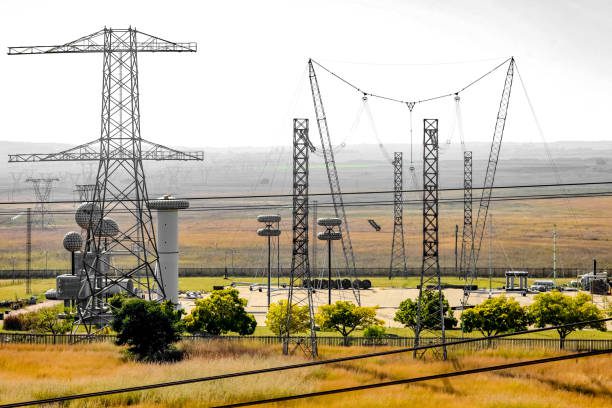
The Eskom Scandal escalated dramatically this week after the Special Investigating Unit (SIU) secured a preservation order freezing assets worth R8 million belonging to an Eskom employee and his spouse. The move forms part of a sweeping investigation into a massive tender kickback scheme that allegedly siphoned public funds while South Africans faced rolling blackouts and infrastructure failures.
The asset freeze, granted by the Special Tribunal, includes a luxury Polokwane property valued at roughly R3.9 million and a Nissan NP200 bakkie linked directly to illicit payments. The SIU says these assets were acquired through fraudulent financial flows from service providers who benefited from improperly awarded tenders.
The revelations have unleashed public outrage, reigniting anger over the ongoing energy crisis and renewing calls for deep reform inside South Africa’s largest state-owned enterprise.
According to the SIU, the Eskom employee at the center of the scandal — identified as Johannes Seroke Mfalapitsa, a project manager within the Transmission Division — allegedly manipulated the procurement process for a R54 million tender involving High-Definition Surveying Services.
Investigators say Mfalapitsa had extensive control over the tender from start to finish.
He allegedly:
This control, according to the SIU, violated Eskom’s internal controls and allowed him to direct the tender toward companies that later paid him kickbacks.
The SIU found a direct money trail:
Payments made by service providers → bank accounts belonging to Mfalapitsa → accounts controlled by his spouse, family members, and associates.
These funds were allegedly used to purchase the Polokwane home, pay for building materials, construct a swimming pool, and fund other personal expenses.
The SIU said its forensic tracing revealed “significant, unexplained financial flows” inconsistent with the income of an Eskom project manager.
In a statement, SIU spokesperson Kaizer Kganyago confirmed:
“The preservation order prevents the respondents from selling, transferring, or dissipating assets found to be linked to corrupt payments that arose from the manipulated tender process.”
The SIU emphasized that the tender process was compromised by:
Authorities also revealed that Mfalapitsa’s spouse, Ndiyafhi Denge, allegedly received payments from one of the bidding companies even before the tender adjudication was finalized — a red flag that investigators say proved undue influence.
The SIU maintains that these irregularities resulted in financial losses to Eskom, which is already struggling under financial and operational pressure.
The Eskom Scandal triggered immediate public anger, especially given the ongoing power crisis affecting millions of South Africans. On social media, many argued that corruption is a root cause of Eskom’s inability to maintain power supply stability.
Users on X (formerly Twitter) posted sentiments such as:
Energy analysts say corruption has long undermined Eskom’s infrastructure development, tender processes, and maintenance schedules.
Professor Mthunzi Dlamini, an energy governance expert, said:
“Every rand stolen from Eskom weakens its ability to operate. Tender fraud isn’t just a financial crime — it is directly linked to why households experience outages.”
Political commentators added that public trust in state institutions continues to erode as more corruption cases surface across SOEs.
The SIU plans to institute civil legal action to:
The preserved assets will be held under control of the Special Tribunal until the full civil recovery process is completed.
Legal experts say the recovery process could take months, but the SIU’s financial freezing order is a strong indication that investigators have confidence in their case.
In addition to civil action, the following outcomes are likely:
If prosecutors deem the evidence strong enough, the duo could face charges including fraud, corruption, money laundering, and contravention of the PFMA.
The companies that allegedly paid kickbacks may face contract termination and blacklisting.
The SIU hinted that more employees and suppliers could be implicated.
Parliament’s energy committee is expected to demand briefings from the SIU and Eskom executives.
This Eskom Scandal has heightened national concern over the state of governance within Eskom. The utility, already struggling with ageing infrastructure and ballooning debt, continues to fight operational instability and recurrent power failures.
Analysts say rooting out entrenched corruption is critical to restoring Eskom’s functionality.
Energy strategist Nomvula Nkomo explained:
“Corruption creates systematic decay. When tenders are awarded to companies based on kickbacks instead of merit, the entire energy grid suffers.”
The Eskom Scandal surrounding the R8 million asset freeze reveals yet another layer of corruption entrenched within South Africa’s most vital state-owned entity. As the SIU intensifies its pursuit of civil and criminal accountability, the public is demanding transparency, recovery of stolen funds, and long-overdue reforms. With the energy crisis still affecting everyday life, South Africans are connecting the dots — corruption does not just drain Eskom financially; it undermines the entire electricity system. The fallout from this scandal is likely far from over.