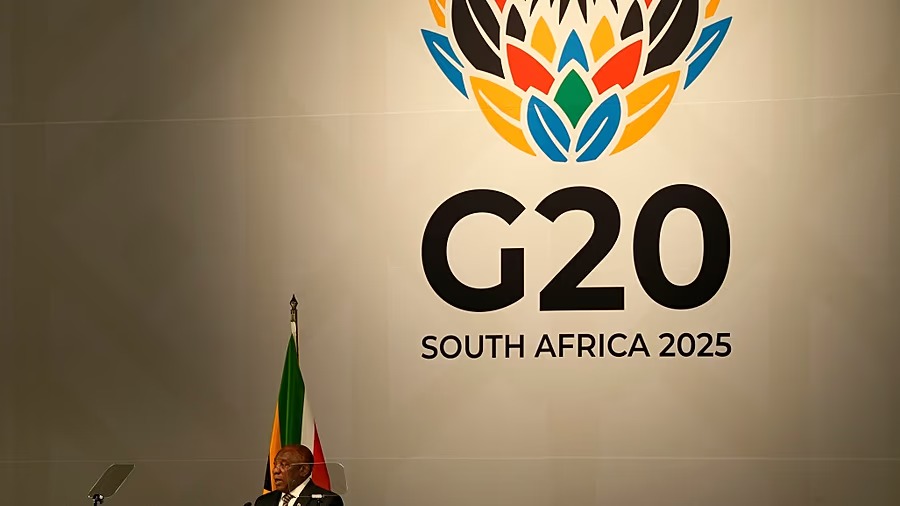
G20 Boycott is the phrase dominating headlines after Donald Trump said no U.S. government officials would attend the 2025 G20 Summit in Johannesburg. The declaration, made with claims about “human-rights abuses” against white farmers/Afrikaners that South African officials reject, introduces unusual tension ahead of a major global meeting. For South Africa, it’s a challenge to host credibility. For other members, it complicates the choreography of communiqués, bilaterals, and finance tracks. The G20 is designed to absorb political frictions, but a total absence by Washington would be rare. Understanding the ripple effects of this decision helps explain what it means for multilateralism, markets, and a summit on African soil.
G20 Boycott puts unusual pressure on the host. South Africa worked to position the summit as a showcase for Africa’s growth and its role in global problem-solving. When a major player publicly steps away, it dents optics and can sap momentum. Delegations calibrate attendance levels, media narratives pivot from agenda to drama, and activists reframe the event. Yet hosts often counter by deepening engagement with other partners and leaning on the sherpa process to keep documents on track. The key for Pretoria will be to show steady management, highlight substantive wins, and demonstrate that a modern African host can still marshal consensus.
G20 Boycott raises questions about the credibility of multilateral forums. The G20 thrives when members show up, disagree frankly, and still sign workable texts. A high-profile absence risks normalizing disengagement at a time when global problems—debt stress, climate shocks, supply chain resilience—require coordination. Other members may respond by doubling down on attendance, signaling that the table remains relevant. The ultimate test is whether the summit can deliver credible communiqués, finance pledges, and technical outcomes without U.S. participation. If yes, it proves resilience; if not, it fuels arguments that minilateral or bloc formats are supplanting the G20.
G20 Boycott will weigh on the Washington–Pretoria relationship. Even in contentious moments, big meetings create space for side-room fixes and direct leader-level clarifications. Without those, grievances can harden. South Africa rejects the human-rights framing cited by Trump and will likely mobilize diplomatic channels to counter the narrative. Trade, investment, health cooperation, and security dialogues could feel the chill if rhetoric escalates. That said, bilateral bureaucracies often keep working in the background, especially where technical cooperation serves both sides. The coming months will show whether political statements translate into policy shifts or stay contained to summit theatrics.
G20 Boycott intersects with BRICS dynamics. South Africa, a BRICS member, has sought to balance its role in both clubs—leveraging BRICS for South-South cooperation while using the G20 to influence global rules. A U.S. absence may push BRICS members to foreground their cohesion at the summit, shaping language on development finance, debt treatment, and technology governance. If BRICS-aligned positions dominate the narrative, Washington’s voice will be missing in debates where it usually pushes for private-sector-led growth, stricter financial safeguards, and supply-chain security. The host’s task is to avoid the event becoming a proxy for geopolitical blocs.
G20 Boycott creates uncertainty for investors looking for policy signals from the summit. Markets don’t move on communiqués alone, but they do track directionality: debt-restructuring guidelines, climate-finance modalities, and trade-facilitation commitments. An empty U.S. chair reduces the chance of joint announcements that rely on U.S. development banks or regulatory agencies. However, other majors can still drive initiatives—particularly on digital trade, carbon accounting, and critical-minerals rules. For South African markets, the immediate test is communication: reassure investors that logistics, security, and agenda management remain professional, and that the summit will still deliver practical steps useful to business.
G20 Boycott turbocharges narrative battles. Advocacy groups, media, and political actors will interpret the decision through domestic lenses—race, human rights, sovereignty, and historical grievances. The host will need a careful communications strategy that acknowledges sensitivities while protecting the summit’s purpose. A transparent press operation, visible engagement with local and international media, and clear fact-based rebuttals can prevent misinformation from defining the week. Just as importantly, highlighting concrete summit outcomes keeps the storyline on solutions rather than spectacle.
G20 Boycott changes security and protocol calculus. High-level U.S. delegations typically add layers of Secret Service coordination, bilateral venues, and motorcade choreography. Their absence simplifies some logistics but raises new ones: re-seating layouts, reworked photo protocols, and adjusted speaking orders. South Africa’s organizing team must manage these tweaks seamlessly so they don’t distract from substance. Contingency planning for demonstrations and online information operations also matters, because boycott narratives can mobilize both supporters and critics.
G20 Boycott means agenda setters must stress deliverables less dependent on U.S. signatures. Think pragmatic steps on trade corridor digitization, food-security financing, pandemic surveillance, and climate adaptation—areas where diverse coalitions can act. The sherpa track can circulate near-final drafts early to limit last-minute edits, while finance track leads can emphasize tools that don’t require congressional appropriations. The host can showcase African initiative by elevating Africa-led partnerships, ensuring the summit advances regional priorities even amidst geopolitical headwinds.
G20 Boycott prompts a bigger question: how should global forums adapt when political cycles cause episodic absences? One answer is redundancy—parallel ministerial tracks that can finalize technical commitments even when leaders are missing. Another is flexibility—hybrid participation or targeted engagements where absent countries still provide written inputs. Finally, accountability—clear tracking of promises so that progress isn’t person-dependent. South Africa, as host, can seed these process innovations to future-proof the G20 for an era of sharper politics.
What does G20 Boycott mean in practice?
G20 Boycott refers to the U.S. not sending officials, altering optics, diplomacy, and potential deliverables at the summit.
How might G20 Boycott affect U.S.–South Africa ties?
G20 Boycott removes chances for quiet fixes and may strain trade and diplomatic channels unless managed carefully.
Could the summit still deliver despite G20 Boycott?
Yes. Pragmatic coalitions can advance finance, food security, and digital trade even without U.S. participation.
G20 Boycott places an unusual test on a summit meant to bridge divides. For South Africa, it’s a chance to prove hosting strength; for other members, a prompt to keep multilateralism working amid disagreements. If the week yields practical deliverables and credible coordination, the G20 can demonstrate resilience. If not, the absence will loom larger than the outcomes, reinforcing skepticism about global forums. Either way, G20 Boycott has already reshaped expectations, making execution and communication the true measures of success.